We all have, at least once, been amazed by a handloom product and wondered how it was made before it reached our hands. Handloom fabrics are textiles that are created on wooden looms by skilled artisans who weave every thread by hand, often using techniques passed down for generations. What makes handloom fabrics truly special is this human touch itself.
The absence of the machines rushing the process, the patience, skill, and love woven into the cloth make every handloom item unique. Many people often see these minor variations as a sign of the authenticity of handloom fabrics.
As people are becoming more aware of sustainable and thoughtful fashion, handmade fabrics are becoming more popular. Choosing these fabrics will support skilled artisans and keep traditional crafts alive for future generations. Here in this article, we will learn about handloom fabrics, their advantages and disadvantages, and list the popular types of handloom fabrics in India.
What are Handloom Fabrics?
Handloom fabrics are an important part of handloom weaving in India, supporting traditional skills and rural livelihoods.
Handloom fabrics are clothes made by hand on a wooden weaving machine called a loom. In this process, two sets of threads are woven together; the vertical ones are called the warp, and the horizontal ones are called the weft. The loom keeps the warp threads tight, and the weft threads are passed over and under them again and again, creating the fabric slowly by hand. Making handloom fabric is an art.
It takes time, patience, skill, and physical effort. The weaver chooses everything carefully: the yarn, colours, patterns, and the weaving style. Because it is handmade, each fabric carries the weaver’s effort and creativity, which makes handloom fabrics truly special.
Advantages of Handloom Fabrics
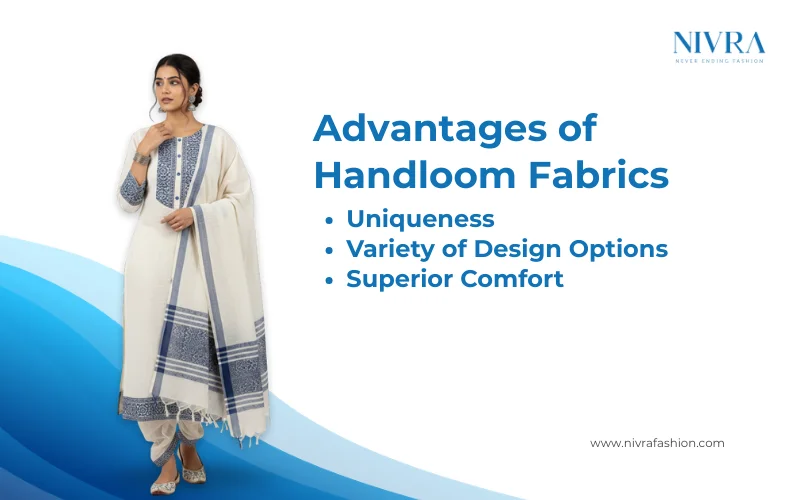
Handloom fabrics are not just loved for their looks, but they also offer many other benefits. They are comfortable, durable, eco-friendly, and crafted with great care.
Uniqueness
Handloom fabrics are special because no two pieces will look exactly alike. Each piece is made by hand, carrying the weaver’s effort, skill, and creativity. The small differences in colour, pattern, or texture make every handloom fabric unique. What makes these fabrics even more valuable and beautiful is that the detailed designs created by handloom artisans cannot be made perfectly by machines.
Variety of Design Options
Handloom fabrics are available in a wide range of styles because the weaver can freely choose colours, patterns, and designs. Also, they can experiment with new ideas anytime. Machine-made fabrics repeat the same pattern again and again, and thus do not offer much variety.
Superior Comfort
Handloom fabrics feel much softer on the skin than most machine-made materials, especially those made with synthetic fibres like polyester or nylon. Handloom fabrics absorb sweat well and allow your skin to breathe, which makes them an ideal choice for hot days.
Helps Keep Traditional Skills Alive
Handloom weaving keeps the old skills and traditional methods alive. The weavers use techniques, patterns, and materials that have been practised for many years. Also, this craft gives people a sense of pride and community, and ensures that these cultural traditions are not forgotten.
Long-Lasting Quality
Handloom fabrics, which are usually made from strong natural fibres like cotton, linen, silk, or wool, last well for many years. As weavers make every piece by hand and check every detail carefully, handloom fabric feels better and lasts longer than machine-made cloth.
Income Source for Rural Families
Handloom work offers a steady income to many families in villages. In India, it is one of the biggest sources of employment after farming. According to the data released by the Ministry of Textiles, about 77% of the weavers are women, which helps them earn their own money and become financially independent.
Environment-friendly
Handloom work is eco-friendly because it follows a natural and sustainable process. Every stage involved in the process, like setting up the loom, choosing the fabric, dyeing, and weaving, is done in a way that does not harm the environment. The fibres used are natural, can break down easily, and are made without using too many chemicals.
Many of the handloom dyes are made from natural things like turmeric, indigo, henna, bark, and flowers, which are gentle on the skin and safe for the environment.
Handloom fabrics are often woven only when needed, so there is limited wastage. Also, any leftover cloth is reused to make new items. As the looms are operated manually, they do not need electricity or water, and they do not create pollution.
Disadvantages of Handloom Fabrics
Even though handloom fabrics are special, like any handmade product, they also come with a few limitations. Given below are some of the most common disadvantages of handloom fabrics:
- Minor Weaving Irregularities:As handmade fabrics are woven by hand, they often have small flaws. But these minor imperfections are quite normal, and they actually add more life to the fabric, offering the cloth a traditional and handcrafted charm.
- Slow and Labour-Intensive Process: The process of making handloom fabrics involves a lot of manual work, which makes it time-consuming. It can take even several months to years to finish detailed designs like those in Patola sarees.
- Costlier Than Machine-Made Fabric: Handloom fabrics are often costlier than machine-made fabrics because they take a lot of time, skill, and effort to make. Weavers carefully choose the right materials, colours, and patterns, which increases the overall price.
- Limited Weaving Capacity: Handloom weavers can produce only a small amount of fabric at a time because everything is done manually. Therefore, it is hard for handloom fabrics to match the large production levels of power looms, which can create fabric much faster.
Popular Handloom Fabrics in India
Each region in India has its own special handloom fabric, and listed below are some of the most popular handloom fabrics in India:
Banarasi
Banarasi handloom fabric comes from Uttar Pradesh and is mainly made using silk threads. This fabric, which is famous for its rich look and detailed craftsmanship, features fine zari work, heavy brocades, and beautiful Mughal-inspired floral patterns. Banarasi fabric is commonly worn for weddings and festive occasions. The grand appearance and premium quality are what make Banarasi fabric truly special.
Chanderi
Chanderi fabric, originating from Madhya Pradesh, is made using silk, cotton, or a blend of both. It is light and has a slightly shiny texture, which features delicate designs such as small coins, peacocks, and floral patterns. This fabric is perfect for summer, festive events, and semi-formal occasions.
Kanjeevaram
Another one in the list of types of handloom fabrics in India is the Kanjeevaram silk from Tamil Nadu. It is made using pure mulberry silk and is known for its rich, traditional look. Kanjeevaram silk sarees usually come with bright, contrasting borders and classic designs like temple patterns and peacocks, woven with gold and silver zari. They are mostly worn for weddings and important celebrations, and are one of the popular weaving styles of South India.
Ikat
It is a unique handloom fabric found in Odisha, Telangana, and Gujarat, which is made using cotton or silk. In Ikat weaving, the threads are tied and dyed before weaving, which helps create beautiful geometric or abstract designs. This weaving is commonly used for sarees, dupattas, and shirts. One of the most detailed and difficult weaving styles in India is Patola from Gujarat, which is also called the Double Ikat.
Pochampally
Pochampally fabric, originating from Telangana, is made using cotton, silk, or a mix of both. In this Ikat-style weaving method, the threads are dyed to create bright colours and geometric patterns. This fabric, which is widely used for sarees and dress materials, carries a GI tag, which highlights its unique identity and craftsmanship.
Maheshwari
Maheshwari fabric, which began with the support of Queen Ahilyabai Holkar, is a popular handloom fabric from Madhya Pradesh. It is made using a mix of cotton and silk, which features designs like stripes, checks, and floral borders. Light and comfortable sarees and dupattas can be made using Maheshwari fabric.
Bhagalpuri
Originating from Bihar, the Bhagalpuri fabric made from Tussar silk comes in earthy shades and hand-dyed colours. This fabric is commonly used for sarees, scarves, and stoles. Bhagalpur, which is known as the “Silk City,” is famous for its eco-friendly silk weaving traditions.
Muga and Eri
Muga and Eri are traditional silks from Assam. Muga silk has a golden shine, whereas Eri silk comes in a soft, cream shade. Both are long-lasting handloom silk fabrics with a natural glow that are used to make traditional Assamese clothing. Muga silk is special because it is found only in Assam.
Kota Doria
Kota Doria is a handloom fabric from Rajasthan that is woven using a mix of cotton and silk. It has a small checkered pattern, known as khat. The fabric is very breathable, so you can easily wear it in hot weather. Kota Doria is commonly used for sarees and dupattas because of its delicate and comfortable texture.
Paithani
Paithani silk from Maharashtra often features beautiful peacock and floral designs, along with a grand pallu decorated with zari work. This fabric, which often comes with a reversible border, is one of the popular choices for bridal wear.
How to Care for Handloom Fabrics at Home
As handloom fabrics are made from natural fibres, they require gentle handling. To keep the handloom fabrics looking fresh and new, here are a few steps you may follow:
- For washing fabrics, use cold water and a mild soap. Also, avoid twisting the fabric too hard.
- Dry the fabric in a shaded area, as drying under strong sunlight may cause the colours of the fabric to lighten.
- While ironing, always set the temperature of the iron box low and place a thin cotton cloth over the fabric before ironing to protect the fabric.
- Keep the fabrics in cotton or muslin bags so they can breathe. Avoid plastic covers, as they trap moisture and cause mildew.
How to Check if Your Handloom Fabric Is Original
Sometimes it can become hard to identify real handloom fabrics from machine-made ones, but here are a few quick checks that can help you recognise them easily.
- Look at the weave: Original handloom fabric may have tiny, uneven spots as it is woven by hand. Machine-made fabric usually looks perfectly even.
- Touch the fabric: Handloom cloth feels soft, rich, and falls naturally, whereas power loom fabric often feels stiff.
- Check the edges: The edges of the handloom fabrics may look slightly uneven or wavy, while fabrics made from power looms are straight and uniform.
- Price Difference: Handloom items are costly because they are handmade and use natural, high-quality materials.
Takeaway
Even though handloom weaving is sometimes seen as a slowly disappearing craft, many efforts are being made to bring attention back to this beautiful art form through exhibitions and social media.
Handloom fabrics are eco-friendly, meaningful, and filled with tradition. So, get yourself a handloom item and experience a beautiful handmade creation that carries stories, culture, hard work and passion of the hands that created it.
Related Topics
| Traditional Indian Prints | Printed Fabric Care |
| what is block printing | What is Ajrakh Print |
Frequently Asked Questions on Handloom Fabrics
Why are handloom fabrics more expensive than machine-made fabrics?
Handloom fabrics are more expensive because each piece is woven by skilled artisans and can take several days or weeks to complete. They are usually made using high-quality natural fibres and natural dyes, which improve comfort and durability. In contrast, machine-made fabrics are produced quickly in bulk using automated processes, reducing their cost but lacking the craftsmanship and traditional value of handloom textiles.
How can I identify original handloom fabric?
Original handloom fabric often shows minor irregularities such as uneven threads, which indicate hand weaving. Many authentic products carry a Handloom Mark or similar certification. The fabric usually feels soft, airy, and natural, with slightly uneven edges and visible thread work on the reverse side rather than a perfectly smooth finish.
Are handloom fabrics suitable for daily wear and summer weather?
Yes, handloom fabrics are suitable for daily wear and summer weather. Made from natural fibres, they allow better air circulation and absorb sweat effectively, helping keep the body cool and comfortable throughout the day.
What are the most popular types of handloom fabrics in India?
Some of the most popular types of handloom fabrics in India include Chanderi, Kanjeevaram, Banarasi, Bandhani, Ikat, and Pochampally, each representing unique regional weaving traditions.