India’s textile industry involves a wide range of fabrics, where each fabric has its own history, feel, and charm. Some of the commonly known fabrics include silk, cotton, linen, wool, etc. Continue reading this article to learn more about the types of Indian fabrics, along with the simple tips to help you pick the right fabric for your clothing needs.
Types of Indian Fabrics
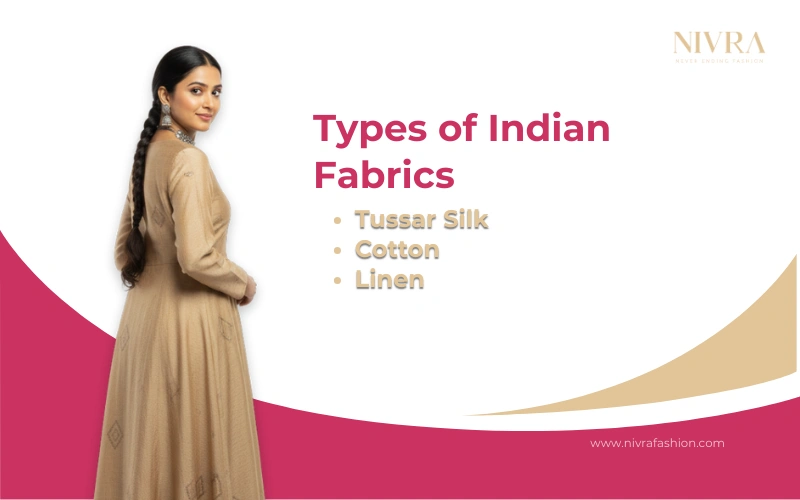
Having a proper understanding of the different Indian fabrics that come not only builds a sense of pride but also helps you pick the most suitable fabric for your clothing needs.
When you are aware of the various types of fabrics available, it becomes easier to decide which material works best for outfits.
Below are some of the commonly found types of fabrics and clothing materials used across India.
Tussar Silk
Tussar silk is a rich fabric that comes with a textured finish and golden shine. It is also popularly known as wild silk because it is made from silkworms found in forests. This age-old fabric is mainly woven in regions such as Jharkhand, Bihar, and West Bengal.
Tussar silk, which is often handwoven, is commonly used to make outfits such as sarees and shawls. It features simple patterns and classic motifs that can be worn for daily wear and special occasions.
Mulmul
Mulmul, which is well known for its soft and airy feel, is an excellent fabric for summer. With its origin in the Bengal region of India, Mulmul was once traded widely to places like the Middle East and Europe.
Mulmul, which is also called muslin, has a smooth texture that ensures everyday comfort. It is usually made from pure cotton or a cotton blend, making it ideal to wear for long hours. It is also used for the manufacturing of sarees, stoles, or kurtis.
Cotton
Cotton cultivation began in India more than 7,000 years ago, with the Indus Valley Civilisation among the earliest communities to grow cotton and turn it into cloth. Cotton fabrics produced in India were traded across the world. The cotton textile industry has played an important role in shaping the country’s culture and economy.
Cotton remains one of the widely preferred fabrics in India, as we experience humid weather in many regions. It allows air to pass through and feels soft on the skin, which makes it an excellent fabric for daily use. Cotton is used to make many kinds of clothing, including kurtas, sarees, dresses, and shirts.
Wool
Wool is a fabric that plays an important role in the colder parts of northern India, especially in regions such as Kashmir and Himachal Pradesh. Local communities in these regions have been skilled at turning wool into shawls, blankets, and warm clothing. Pashmina shawls are a popular wool clothing item that is well known for their softness, warmth, and premium feel.
Kullu and Kinnauri shawls, hailing from Himachal Pradesh, are also admired for their bright colours, detailed designs, and traditional patterns that depict the local culture and craftsmanship.
Linen
Linen is one of the earliest fabrics known to people. It was earlier used in Egypt, where it was worn by priests and used in burial rituals. It has the ability to absorb moisture, allow air to pass through, and stay durable.
This fabric is well-suited for warm weather as it feels cool on the skin. Line, which is made from the fibres of the flax plant, is widely used to create kurtas, dupattas, stoles, trousers, and shirts for men. It is easy to care for linen outfits, and they become softer the more they are washed.
Kanjeevaram
Kanjeevaram is an Indian fabric name that we would have heard at least once while searching for sarees. Known by various other names such as Kanchipuram or Kanivaram silk, it has its origin in the town of Kanchipuram in Tamil Nadu. Kanjeevaram silk features bold colours, detailed designs, and rich zari patterns. The fabric is strong and long-lasting, which makes it ideal for special occasions and festive wear.
Chanderi silk
The Chanderi town in Madhya Pradesh is the origin of Chanderi silk, which has a long history that goes back to the 11th century. In the early days, this fabric was made mainly from cotton, to which silk was added later to give it a richer look. Chanderi fabric became widely known for its lightweight and slightly sheer texture during the Mughal period and was often chosen by royal families.
Chanderi silk in modern times combines the richness of silk and the comfort of cotton. The fabric feels light on the body and is suitable for regular wear while still looking neat and well finished. Chanderi fabric is commonly used to make traditional outfits such as sarees and lehengas. The detailed designs and zari work done with gold or silver threads add a traditional charm to the fabric.
Jamdani
Jamdani fabric, also known as Dhakai, comes from the Bengal region of India. It gained great popularity during the Mughal period. It is a finely woven cotton fabric that is light, soft, and allows air to pass through easily.
Jamdani is sometimes mistaken for muslin. The fabric contains detailed handwoven designs, often created using gold or silver threads. Due to its rich appearance, Jamdani is commonly used to make traditional ethnic outfits. The geometric patterns add character to this fabric.
Maheshwari
Maheshwari fabric, originating from the Maheshwar town in Madhya Pradesh, was introduced by Queen Ahilyabai Holkar in the 18th century. The fabric was created for the royals due to its rich look and unique designs.
The fabric often features patterns such as stripes, checks, and floral designs. Maheshwari fabric, which is made by combining silk and cotton, creates a light feel, making it comfortable to wear. Various traditional outfits, including sarees, suits, and lehengas, are manufactured using Maheshwari fabric.
Silk
Silk remains a staple fabric for celebrations and special events due to its soft feel and rich look. The shineness makes your outfit bright and adds charm, which makes it suitable for festive and traditional wear. Sarees, lehengas, suits, and sherwanis made from silk are always popular outfit choice for weddings, festivals, and cultural ceremonies.
How to Choose the Best Fabric for Your Outfit
Here are the points to keep in mind before picking the right fabric for your outfit:
- Occasion: While selecting fabric for your outfit, think about the occasions for which you will be wearing that outfit. Rich materials like silk or brocade are ideal for formal events. For daily and casual wear, choose cotton and linen fabrics.
- Weather: In warm weather, go for breathable fabrics such as cotton and linen, as they can keep you comfortable all day long. Try thicker options like wool or pashmina for cooler climates.
- Comfort: The fabric of your outfit should always feel soft on your skin and allow you to move freely throughout the day.
- Fabric Care: Some fabrics may need extra care. So, pick materials that can fit your lifestyle, and depending on how much maintenance you are comfortable with.
- Personal Taste: Pick fabrics that match your style and make you feel confident. The right fabric can instantly improve your overall look.
Wrapping Up
The traditional clothing in India is a reflection of our culture, heritage, and skilled craftsmanship. Each fabric has its own character and purpose. Learning about the different types of Indian fabrics will help you value this craftsmanship and choose the right fabric when selecting traditional outfits. Choose from the wide variety of fabrics while ensuring they are suitable for the occasion and your personal style.
Related Topics
| Handloom Fabrics | Best Fabrics for Kurtis |
| Printed Fabric Care | Traditional Indian Prints |